
finsterbrad
May 29
2 min read
Published by UC San Diego
Researchers at the University of California San Diego have reported promising findings involving a naturally occurring peptide known as catestatin (CST), which may help address one of the most challenging aspects of melanoma treatment: drug resistance.
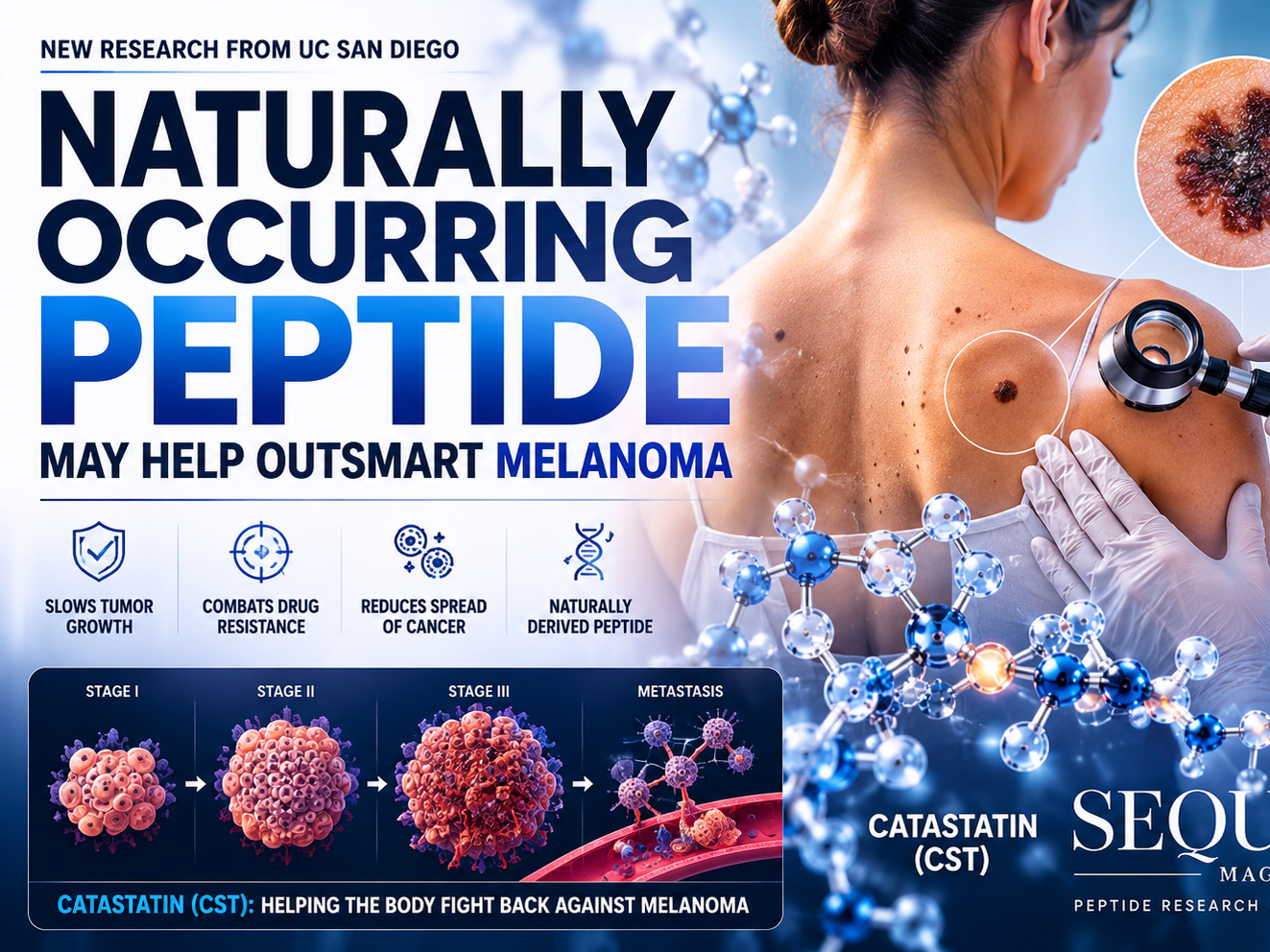
According to the research team, CST is a bioactive peptide derived from Chromogranin A (CgA), a protein naturally produced within the body. In laboratory and animal studies, researchers observed that CST significantly slowed melanoma growth, reduced the cancer’s ability to spread, and restored treatment sensitivity in melanoma cells that had previously become resistant to therapy.
Melanoma remains one of the most difficult forms of skin cancer to treat because cancer cells can rapidly adapt to therapies over time. Researchers believe CST may help interrupt some of the biological pathways responsible for that resistance, potentially making tumors more responsive to treatment.
The study also found that CST appeared to selectively target melanoma cells while leaving healthy skin cells largely unaffected, an observation that researchers say could represent an important advantage compared to some conventional cancer treatments.
Additional findings showed that naturally occurring CST levels tended to decline as melanoma progressed to more advanced stages. Researchers suggest this may indicate that the loss of the peptide could play a role in allowing tumors to evade some of the body’s natural protective mechanisms.
Beyond melanoma, scientists are continuing to investigate whether CST may have broader applications in areas such as cardiovascular health, metabolic disorders, immune regulation, and neurodegenerative diseases.
While the results remain early-stage and additional preclinical and clinical studies will be necessary, researchers believe the findings highlight the growing potential of peptide-based approaches in future therapeutic development.
The study was published in Oncogenesis and was conducted by researchers at UC San Diego School of Medicine and the VA San Diego Healthcare System.
Why This Matters
Cancer researchers continue exploring highly targeted treatment approaches that may improve effectiveness while minimizing unintended effects on healthy tissue. Peptide-based therapies represent one area of increasing interest because of their ability to interact with specific biological pathways.
Although catestatin research remains in the early stages, the findings contribute to a growing body of evidence suggesting that naturally occurring peptides may play an increasingly important role in future oncology research and drug development.
Credit: Based on reporting and research published by UC San Diego and findings reported in Oncogenesis.
Editor’s Note: This article is provided for educational, research, editorial, and industry discussion purposes only. Sequence Magazine does not promote, recommend, endorse, or imply any medical use, treatment outcome, therapeutic benefit, or health claim. The information presented reflects published scientific research and should not be interpreted as medical advice, treatment guidance, or regulatory approval.